

By Nmesoma Ukwuoma
Gender inequality is not only about how people treat women and girls. It is also about how laws, workplaces, political institutions and social expectations shape the opportunities available to them.
It can be seen in who gets encouraged to pursue an education, who has the freedom to build a career, who gets a seat at a decision-making position.
These experiences may seem unrelated, but they are often shaped by the same underlying issue; the systems that influence how women and girls live, work and participate in society.
To understand why these gaps remain, we need to examine the systems that influence it in Nigeria.
1. Education Systems: Access Is Only the Beginning
Education creates opportunities, improves economic prospects and gives girls more control over their futures. However, access to education remains a challenge for many children in Nigeria, particularly in communities where poverty, insecurity and social expectations affect school attendance.
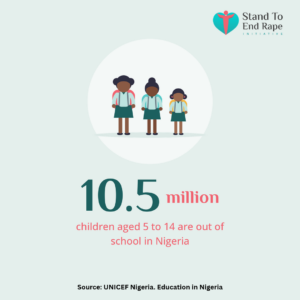
According to “UNICEF Nigeria, about 10.5 million children aged 5 to 14 are out of school in the country. Girls in some regions face additional barriers linked to poverty, insecurity and expectations about their roles within the family and community.
When girls cannot access or complete their education, the consequences can extend beyond the classroom. Their future employment opportunities, earning potential and ability to participate in decision-making may also be affected.
This is why improving access to education requires more than making schools available. It also means addressing the economic, social and practical barriers that prevent girls from benefiting from education.
2. Workplace and Economic Systems: Having Qualifications Is Not Always Enough
Education can prepare women for employment, but it does not automatically guarantee equal economic opportunities.
In Nigeria, women participate in different parts of the economy, from formal employment to small businesses and informal trading. However, their opportunities can be influenced by access to finance, workplace policies, legal protections and expectations about their responsibilities at home.
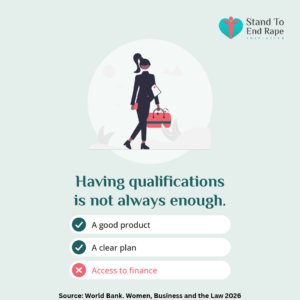
Consider a woman who wants to grow her business. She may have a good product and a clear plan, but limited access to financing could make expansion difficult. Another woman may be qualified for a leadership position but face expectations that she should prioritize family responsibilities over career advancement.
These examples show how economic opportunities can be shaped by factors beyond an individual’s skills or willingness to work.
The World Bank’s “Women, Business and the Law 2026” report examines how laws, policies and their implementation affect women’s economic opportunities. Its Nigeria study looks at differences across eight locations, including Lagos, the Federal Capital Territory, Anambra, Bauchi, Kaduna, Kano, Oyo and Rivers.
The findings highlight gaps in legal and supportive frameworks affecting areas such as work, parenthood, childcare and entrepreneurship. They also show that women’s experiences can differ depending on their location and the legal frameworks that apply to them.
This matters because having a right written into law does not automatically mean that someone can exercise it in practice. Women also need accessible support systems and institutions that implement and enforce protections effectively.
Economic empowerment is therefore not only about encouraging women to work harder or start businesses. It is also about ensuring that the systems around them allow them to participate and progress.
3. Political Systems: Who Gets to Make Decisions?
The people represented in political spaces help shape the laws, policies and public decisions that affect everyone. When women are significantly under-represented, their experiences and priorities risk receiving less attention.
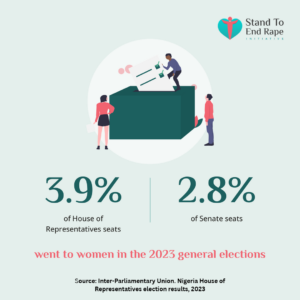
Nigeria’s 2023 general elections highlighted this challenge. According to the Inter-Parliamentary Union, women won just 14 out of 360 seats in the House of Representatives, representing 3.9% of the chamber’s membership. In the Senate, only three women won seats out of 109, accounting for 2.8% of its membership at the time.
These figures show just how limited women’s representation is in Nigeria’s National Assembly and raise important questions about the barriers women face when seeking political office.
Running for office can require substantial financial resources, political networks and access to party structures. Women may also encounter discrimination, harassment, political violence and social expectations that discourage their participation.
This is why the proposed Special Seats Bill is an important part of conversations about gender equality in Nigeria.
The proposal seeks to create additional legislative seats for women in the National Assembly and State Houses of Assembly. It aims to provide a structured route for improving women’s representation rather than relying entirely on the existing electoral system to produce more women legislators.
Supporters argue that reserved seats could help address longstanding barriers and give more women opportunities to contribute to lawmaking. However, questions about implementation, accountability and how the arrangement would work in practice remain important.
The bill is not the only solution to women’s under-representation. Political parties and electoral institutions also need to address the barriers women face.
However, it demonstrates why changing individual attitudes may not be enough when the structures through which political participation happens remain unequal.
Improving women’s representation requires examining who gets the opportunity to lead, how those opportunities are distributed and what changes are needed to make political participation more accessible.
Sign the petition and add your voice to the call for change.
4. Care Systems: The Responsibilities That Affect Opportunity
Some of the systems that shape women’s opportunities exist within families and communities rather than workplaces or government offices.
Across many households, women are expected to take on a large share of childcare, cooking, cleaning and other unpaid responsibilities. These tasks are essential to everyday life, but they can also affect the time women have available for paid employment, education, business and public participation.
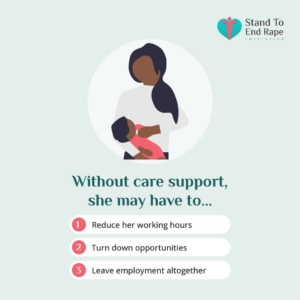
Consider a woman who wants to return to work after having a child. Her ability to do so may depend on whether affordable childcare is available, whether her workplace offers appropriate support and whether other family members share care giving responsibilities.
Without these forms of support, she may have to reduce her working hours, turn down opportunities or leave employment altogether.
Addressing these challenges requires more than asking families to make different choices. It also means considering the availability and affordability of childcare, workplace policies, parental support and how care giving responsibilities are shared.
When care responsibilities limit women’s opportunities, we must also examine the systems that make balancing family life and work more difficult.
5. Safety and Justice Systems: What Happens When Protection Is Needed?
Gender inequality also affects how safely women and girls can move through their daily lives and seek help when they experience violence.
Laws and policies are important, but their existence does not automatically mean that everyone can access protection or justice.
For someone experiencing domestic violence, getting help may involve reporting the abuse, finding a safe place to stay, accessing healthcare or seeking legal assistance. Whether these options are available and accessible can make a significant difference.
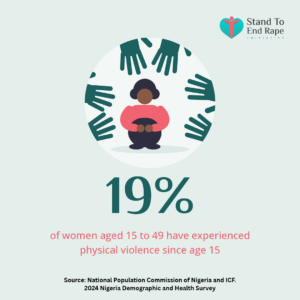
The “2024 Nigeria Demographic and Health Survey” found that 19% of women aged 15 to 49 had experienced physical violence since age 15. Among women who had ever experienced physical or sexual violence, the survey also found that many had neither sought help nor told anyone.
Fear of further harm, financial dependence, stigma and privacy concerns may affect whether someone seeks support. These experiences differ from person to person, but they demonstrate why accessible and trustworthy services matter.
This reinforces an important point: having a law in place does not automatically mean that someone can access justice or protection when they need it.
Addressing gender inequality requires attention to the institutions responsible for reporting, healthcare, legal support and accountability. It also requires examining whether survivors can access these services safely and whether the systems respond effectively.
Protection must mean more than having a law in place. It must mean that people can access the support and justice they need when their safety is threatened.
The examples across education, employment, politics, care and safety show that gender inequality does not exist in only one part of society. Although the experiences differ, each can be influenced by the systems around.
This is why addressing gender inequality cannot be limited to encouraging women and girls to work harder, become more confident or overcome challenges on their own. Individual effort matters, but it cannot replace fair opportunities, effective policies, accessible services and institutions that protect people’s rights.
In Nigeria, this means examining how education policies are implemented, whether women can access economic opportunities, what prevents them from participating in political decision-making, how care responsibilities are supported and whether protections against violence work in practice.
Understanding how these systems work is an important step towards identifying the changes needed and supporting efforts to make them possible.
Sources
UNICEF Nigeria. Education in Nigeria
World Bank. Women, Business and the Law 2026
Inter-Parliamentary Union. Nigeria House of Representatives election results, 2023
National Population Commission of Nigeria and ICF. 2024 Nigeria Demographic and Health Survey


